
Team
Ariane Ollier-Malaterre
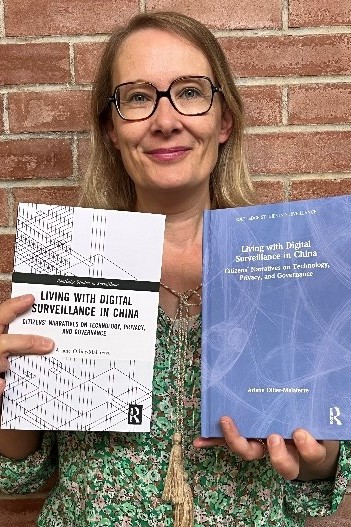
Ariane Ollier-Malaterre, Ph.D., is the Canada Research Chair in Digital Regulation at Work and in Life and the Director of the International Network on Technology, Work and Family at the University of Quebec in Montreal (ESG-UQAM), Canada.
Her research examines digital technologies and the boundaries between work and life across different national contexts. She has published over 75 peer-reviewed chapters and co-authored articles in management, sociology, psychology, and information systems journals (e.g., Academy of Management Review, Academy of Management Journal, Annual Review of Sociology, Journal of Applied Psychology, Computers in Human Behavior), as well as the monograph Living with Digital Surveillance in China. Citizens’ Narratives on Technology, Privacy, and Governance (Routledge Studies in Surveillance, 2024).
She has received the Kanter Award for Excellence in Work-Family Research and several Best paper awards. She is a founding member of the Work and Family Researchers Network and co-chairs the Technology, Work and Family research community of this interdisciplinary network. She serves on the board of several academic journals and international scientific committees, and as a mentor for the Academy of Management and the Association of Internet Researchers.
Her work is regularly featured in the media (e.g., Radio Canada CBC News, La Presse, The Washington Post, The Wall Street Journal, BBC, Financial Times, Slate, Business Insider, Le Monde, L’Usine digitale,La Tribune, Corriere della Sera) and she has co-authored invited pieces for widely read outlets such as Harvard Business Review, Stanford Social Innovation Review, The Conversation, Le Devoir and The Globe and Mail. She provides training and conferences services to organizations and works with the unions and policy makers.
Collaborators
The Chair originates in a network that has developed over the years, through conferences, visits, and co-authoring: the International Network on Technology, Work and Family hosted at ESG UQAM.
Its current members are listed below.

Marie-Colombe Afota is an Assistant Professor at the School of Industrial Relations at the Université de Montréal. She holds a PhD from HEC Montréal, as well as an MBA from ESSEC Business School and a master’s degree in social and work psychology from University of Paris VIII. She has a 10-year business experience as a market & opinion researcher. Marie-Colombe’s research focuses on supervisor-subordinate relationships, overwork, workaholism, employee well-being, and remote work. Her work has been published in peer-reviewed journals, including Human Resource Management Review and European Journal of Work and Organizational Psychology and has been presented at various international conferences such as the Academy of Management (AOM) annual meeting, and the Society for Industrial and Organizational Psychology (SIOP) annual conference.
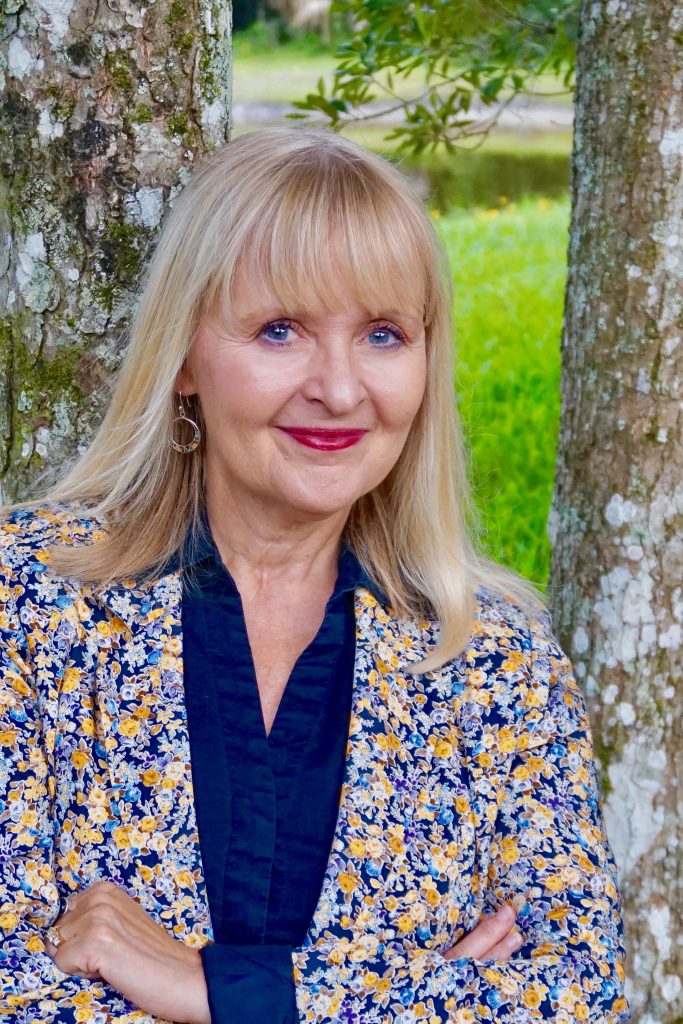
Tammy D. Allen is Distinguished University Professor at the University of South Florida. Her research is focused on individual, organizational, and societal factors that relate to employee work-family experiences, career development, and wellbeing. She is the author of over 150 peer-reviewed journal articles that have received multiple awards. She has held a variety of elected service roles, including president of the Society of Industrial and Organizational Psychology. She is a Fellow of the American Association for the Advancement of Science, Academy of Management, Society for Industrial and Organizational Psychology, the American Psychological Association, and the Association for Psychological Science. In 2021 she received the Herbert Heneman Jr. Award for Career Achievement from the Academy of Management Human Resources Divisionand in 2022 she received the Ellen Galinsky Regenerative Researcher Award from theWork Family Research Network.
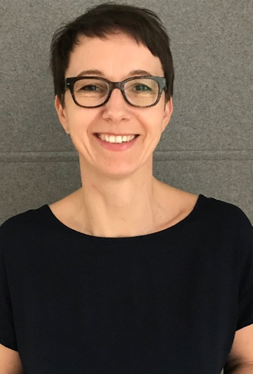
Barbara Beham is a professor of Organizational Psychology and Cross-cultural Management at the Berlin School of Economics and Law since 2014. Before joining HWR Berlin in 2014, she was an associate professor of Gender & Diversity Management at Technical University Berlin and an assistant professor of Gender & Diversity Management at Humboldt-Universität zu Berlin. Prior to her professor positions, she spend two years as a post-doc working in an EU funded research project on quality of work and life in Europe at the University of Hamburg. She got her doctoral degree in 2006 from the University of Linz/Austria, after having spent two years working as a research assistant at the Department of Managing People in Organizations at IESE Business School in Barcelona/Spain. She participated in various cross-cultural research projects on the quality of work and private/family life and the impact on employee well-being.

Sarah Bourdeau is a professor of organizational behavior at the École des sciences de la gestion (Université du Québec à Montréal) and a work and organizational psychologist. She holds a doctorate in psychology from the Université du Québec à Montréal (2021), and has published in the Academy of Management Review. She has many years of professional experience in a corporate environment in the fields of leadership and personnel development, organizational development, diversity, equity and inclusion, and strategic alignment. Her research interests focus on the work-life interface, including organizational work-life arrangements, new careers in the digital age, and equity, diversity and inclusion. She teaches organizational behavior and organizational diagnosis in human resources management.

Tyler Brosseau is a third-year undergraduate student in Psychology at McGill University. He joined the Canada Research Chair on Digital Regulation at Work and in Life as a research assistant on a project on human-AI intimacy, for which he is conducting in-depth semi-structured interviews with participants worldwide. His research interests lie at the intersection of social cognition and human-AI interaction, with a focus on the psychological processes underlying how intimate relationships with AI are formed and maintained, and on the bidirectional relationship between AI use and users’ offline behaviors, individual differences, and mental health. He explores these questions further through McGill University’s Social-Centered AI (SCAI) Lab’s project on human-AI companionship. Tyler is committed to developing a multidisciplinary understanding of human-AI interaction that can inform evidence-based policy and better protect vulnerable populations.

Jess Capstick-Dale is a PhD candidate in Management Studies at the University of Cape Town (UCT). Her research explores how low-income mothers use digital technologies to perform unpaid care work. Her work draws on feminist economics, postcolonial ethics of care, and intersectionality, with an interest in Global South perspectives on digitisation and social reproduction. Jess is also Communications Lead for The Motherload Project, an IDRC-funded initiative on care economies, and lectures in the School of Management Studies at UCT. She previously completed a double Master’s degree in Women’s and Gender Studies through the Erasmus Mundus GEMMA programme at the University of Bologna and Utrecht University, and an Honours Degree in Gender and Transformation at UCT.

Heejung Chung is Professor of Work and Employment at King’s College London. She is a comparative labour market researcher with a focus on flexible working, home/remote working, future of work, and gender equality. She has over two decades of experience of research and teaching and have worked with both national (UK, Korea, Germany, Italy, Estonia etc.) and international (European Commission, OECD, ILO, UN etc.) government agencies. She has published over 100 publications, including her recent book The Flexibility Paradox (Policy Press, 2022) and report Flexible working arrangements and gender equality in Europe (European Commission, 2024). In recent years she has been exploring biased views against remote workers, and the negative outcomes due to such biases – such as exacerbation of social inequalities and digital presenteeism behaviour. She is also exploring how organisational and national contexts (such as right to disconnect) help mitigate these problems. You can find out more about her on her webpage, and on Twitter @heejungchung and Linkedin

Camille Desjardins is an Assistant Professor of Organizational Behavior and Human Resource Management at the Suliman S. Olayan School of Business, American University of Beirut (AUB). Prior to joining AUB in August 2024, she worked for two years at Renmin University of China in Suzhou. She received her Ph.D. from the University of Toulouse in France. There, she studied the work experiences of mothers and their career-related outcomes in the context of maternity leave and the Covid-19 pandemic. This research was supported by a national grant from the Agence Nationale de la Recherche and was published in the academic journals Group & Organization Management and Journal of Organizational Behavior. Her main research interests include organizational justice, gender career equality and new ways of working. Her newest research takes a gender perspective on the gig economy.
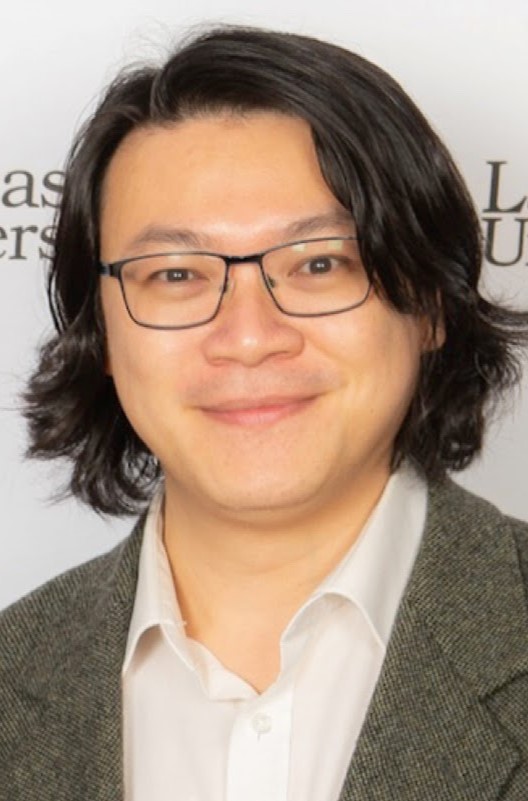
Yang Hu is Associate Professor in Sociology at University College London, Social Research Institute. He is co-director of the Early Career Fellowship Program at the Work and Family Researchers Network (WFRN) and a member of the UNESCO Inclusive Policy Lab. His research examines family and work changes and inequalities in a global context, including the implications of digitalization and AI (artificial intelligence) for work
and family lives. Yang’s recent research has been published in journals including Nature Human Behaviour, Gender & Society, Journal of Marriage and Family, European Sociological Review, and the British Journal of Sociology. He is also author of the book Chinese-British Intermarriage – Disentangling Gender and Ethnicity. Yang’s recent/ongoing collaborative projects on the implications of AI for work and family inequalities are funded by the Economic and Social Research Council (UK) and the Social Sciences and Humanities Research Council (Canada).

Ameeta Jaga is Professor of Organisational Psychology in the School of Management Studies at the University of Cape Town and holds a non-resident fellowship with the Hutchins Centre for African and African American Research, Harvard University. She takes a Southern and decolonial approach to address the geopolitics in knowledge production and focuses on a gendered and social class analysis of work-family concerns primarily among low-income mothers. Ameeta employs feminist methodologies, such as photovoice, for participatory action research aimed at achieving epistemic justice. Her work has influenced workplace support for breastfeeding and enhanced the acknowledgment of care work in government policy design and improvements. She has published widely across disciplines including Gender, Work and Organisation, International Journal of Human Resource Management, and Journal of Applied Psychology. She isassociate editor of the journal Community, Work, and Family.

Ellen Ernst Kossek is the Basil S. Turner and University Distinguished Professor at Purdue University’s Krannert School of Management and holds a Ph.D. in organizational behavior from Yale University, an MBA for the University of Michigan and a Bachelors’ degree with honors in psychology from Mount Holyoke College. Her research has won many awards and examines leadership and strategic initiatives to advance gender equality, work-life equality, and implementing flexibility policies and remote work as to foster diversity and inclusion. Ellen is the first elected President of the Work-Family Researchers Network and elected a Fellow of the Academy of Management, APA, and SIOP. She has also been appointed a University Distinguished Professor at Michigan State University and been a visiting scholar at the University of Bologna; several major universities in the U.K. including an upcoming 2022 Fulbright on flexibility, gender and careers; UNISA in Australia, and served on IESE’s work-family and women’s leadership advisory board in Barcelona, Spain. She led in writing a report for the U.S. National Academy of Science on the effects of COVID-19 on the work-life boundaries of Women in STEMM Scientists.
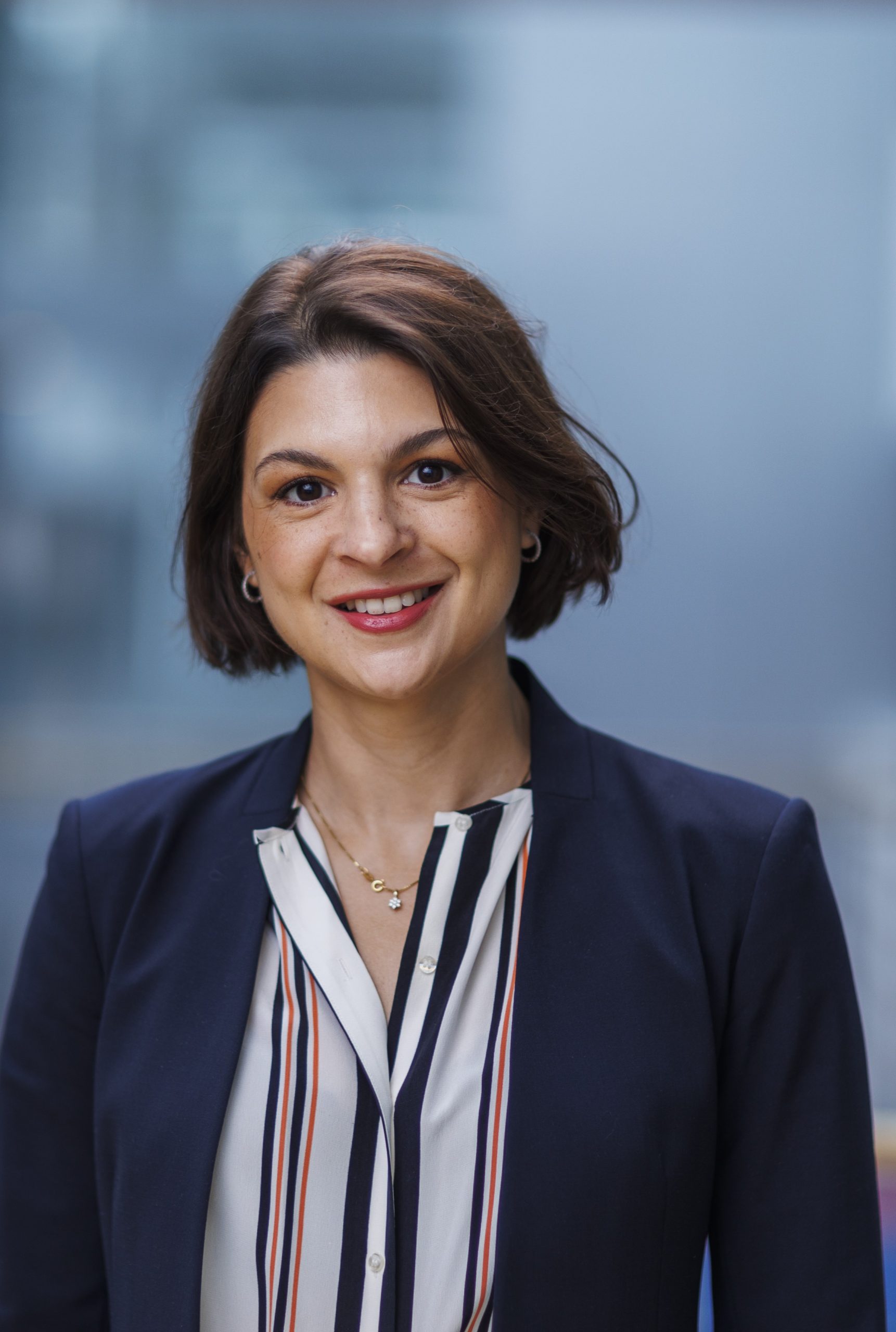
Dominique Kost holds a PhD in organizational psychology and works as an associate professor at BI Norwegian Business School. She previously worked as a consultant in the HRM industry before entering academia. Her research focuses on how technology changes work and collaboration. Specifically, her projects explore status perceptions on social media, AI and motivation, remote/ hybrid work and interpersonal relationships, communication processes in virtual teams, and gig work. Dominique’s research has been published in top-tier academic journals such as Human Resource Management Journal, Journal of Occupational and Organizational Psychology, Journal of Vocational Behavior, and Journal of Applied Psychology. Dominique is an active member of Work Family Researchers Network where she co-chairs the Technology, Work, and Family community, and regularly presents her research. She also presents at other international academic conferences such as Academy of Management Annual Meeting, European Association for Work and Organizational Psychology, and Computer Supported Cooperative Work.
Charles-Étienne Lavoie is a doctoral candidate (Psy.D. and Ph.D.) in work and organizational psychology at the Université du Québec à Montréal. Holder of doctoral grants from the Social Sciences and Humanities Research Council (SSHRC) and the Fonds de Recherche du Québec – Société et Culture (FRQSC), his research interests concern motivation (and passion) as well as strategies for regulating emotions, cognitions and behaviours that favour the conciliation between different roles (such as work and family). In particular, his thesis examines the links between some of these regulatory strategies and the successful resolution of work-life conflict episodes, as well as the implications of these relationships for worker well-being and performance. He plans to pursue a career that will allow him to follow his passion for research while welcoming opportunities to use his knowledge for intervention.

Emmanuelle Léon is associate professor of Human Resource Management at ESCP Business School, Paris campus. Since December 2019, she is the Scientific Director of the Reinventing Work Chair in partnership with Bivwak! and BNP Paribas. Her research projects focus on teleworking, remote management and (new) workspaces. She is more broadly interested in the transformations induced by digital technology and artificial intelligence on management, a subject on which she published in 2018 a book with C. Dejoux (Editions Pearson), nominated in 2019 for four awards, including that of the French Ministry of Labor. She regularly participates in academic and professional conferences on these subjects, in France and internationally. In addition, Emmanuelle Léon was a visiting fellow at ILR (Cornell University) in 2011, and participated in the International Teachers Programme (ITP) at the Kellogg School of Management, Northwestern University in July 2010.

Josiane Lévesque is a PhD candidate in administration with a specialization in management at ESG UQAM. She holds a master’s degree in marketing. Over the past decade, Josiane has worked in
marketing and as a management consultant. She is particularly interested in managers’ roles and the impact of technologies on relationships with employees, job satisfaction, and role conflict management. During her PhD under the supervision of Professor Ariane Ollier-Malaterre, Josiane will study how digital tools, especially surveillance software, are changing the role of managers and the relationships between managers and their teams.
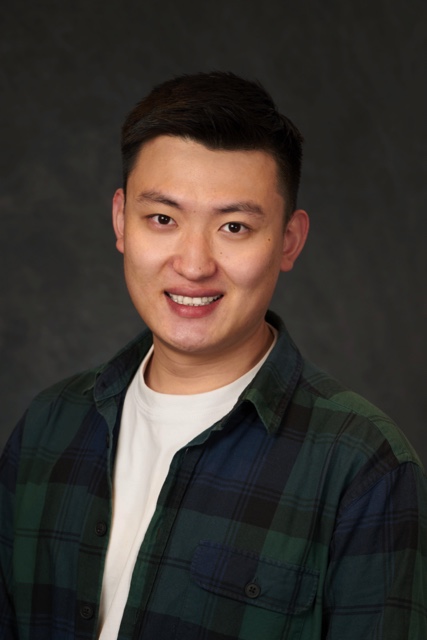
Qingyu Liang is an Assistant Professor in the Faculty of Business at City University of Macau, Macau SAR, China. He received his PhD in Management Science from Beijing Jiaotong University. He was a Doctoral Intern and Postdoctoral Researcher at Université du Québec à Montréal and a Visiting Scholar at Syracuse University. His research interests include the future of work within human-AI collaboration and human-AI intimate relationships. His work has been published in journals such as Information Systems Frontiers, Journal of Global Information Management, and Technology, Mind & Behavior, and has been presented at conferences such as HICSS and AMCIS. His paper received the Best Paper Award at the CNAIS Annuals Conference in 2021.

Gabriele Morandin is Professor of Organizational Behavior at the Department of Management of the University of Bologna, Italy, where he is also Director of the Bachelor in Business Administration. He received the Ph.D in Management in 2005 at the University of Bologna and he has been Visiting Scholar and Research Assistant from 2004 to 2006 at the University of Michigan, USA. His research is focused on sustainable relationships both at work and off-work. Gabriele seats on the Editorial Board of the Journal of Vocational Behavior and gained awards both for research (Outstanding Reviewer 2010, Academy of Management Meeting, MOC Division; Best Paper Award 2012 – XIII Italian Conference on Organization Studies; Outstanding Contribution in Reviewing 2018, Journal of Vocational Behavior; Best Reviewer 2019, European Management Review) and teaching (100% Overall Students Satisfaction, for the Organization and HRM bachelor course in 2012, 2016, 2020 ).

Xavier Parent-Rocheleau is an Assistant Professor of human resources management at HEC Montreal, Canada. He holds a Ph.D. in human resources management and Organizational Behavior from the University of Quebec in Montreal (ESG UQAM), Canada, and he has been Visiting Scholar at the Curtin University, Australia. His research is focused on algorithmic management of the workforce, workplace surveillance, quantification and datafication of work, and leadership. His work has been published in influential journals of inter-disciplinary field such as Human Resource Management Review, Journal of Business Research, European Journal of Work & Organizational Psychology, Public Administration Review, Journal of Leadership & Organizational Studies, Journal of Business & Psychology, and Journal of Work & Organizational Psychology.

Sabrina Pellerin is a Ph.D. candidate at ESG UQAM, and holder of the Joseph-Armand-Bombardier doctoral scholarship awarded by the Social Sciences and Humanities Research Council (SSHRC). Her thesis, under the supervision of Professor Julie Cloutier, focuses on the risk factors associated with the psychological health of managers, particularly the various aspects of the management and supervisory role. Her master’s thesis focused on the psychological mechanisms underlying the effects of rewards on psychological health. Sabrina also acts as a research assistant on various projects regarding psychological health and is a lecturer in human resources management. She cherishes the idea of becoming a professor to continue teaching and carry out beneficial projects for the workplace and its workers.

Aurélie Petit is a PhD Candidate in the Film Studies department at Concordia University, Montréal. She specializes in the intersection of technology and animation, with a focus on gender and sexuality. Her thesis examines the role that U.S.-based Japanese animation online communities played in shaping contemporary sociotechnical uses of social media, and in particular exclusionary practices towards women users. During the Summer 2023, she was a PhD Intern at Microsoft Research where she worked on the limits of applying liveaction governance frameworks to animated pornographic media. She is currently a Doctoral Fellow in AI and Inclusion at the AI + Society Initiative (University of Ottawa), working with Professor Jason Millar and the CRAiEDL on the ethics of synthetic pornography.

Yanick Provost Savard is a professor in the Department of Psychology at the Université du Québec à Montréal (UQAM) and head of the department’s Work and Organizational Psychology section. His research laboratory, Laboratoire de recherche sur les sphères de vie et le travail, focuses on the issues surrounding telework and work-life balance. His work has been published in several national and international scientific journals, including Canadian Psychology, The International Journal of Human Resource Management and Journal of Occupational and Organizational Psychology. He has carried out and currently directs research projects in partnership with Quebec and Canadian organizations and companies, notably through his involvement with UQAM’s Service aux collectivités.

Ashkan Rostami is a Ph.D. candidate in organizational behavior (OB) at John Molson School of Business, Concordia University; he is co-supervised by Tracy Hecht and Ariane Ollier-Malaterre. He is also a member of the International Network on Technology, Work, and Family at the University of Quebec in Montreal (ESG-UQAM). Ashkan has a background in engineering and holds an MBA. One of his main research interests is the employee-organization relationship. His master’s research applied data mining methods to predict employee turnover. His Ph.D. research examines changes in work environments and arrangements through the lens of organizational justice. He also studies human-technology interactions and their effects on employee’s lives.
Marcello Russo is Associate Professor of Organizational Behavior at the University of Bologna, Italy and Director of the Global MBA at Bologna Business School. He is an expert on work-life balance, with a focus on which individual strategies and organizational factors can help individuals accomplish their ideal model of work-life balance. His research has been published in academic journals including Harvard Business Review, Journal of Management, Journal of Vocational Behavior (where he served as Associate Editor), MIT Sloan Management Review, Human Resource Management Journal, and Human Resource Management Review. He has gained significant teaching experience at post-graduate and Executive level in the following areas: Organizational Behavior, Human Resource Management, Leadership, and Change Management. He has also attended the 2019 International Teachers Program (ITP).
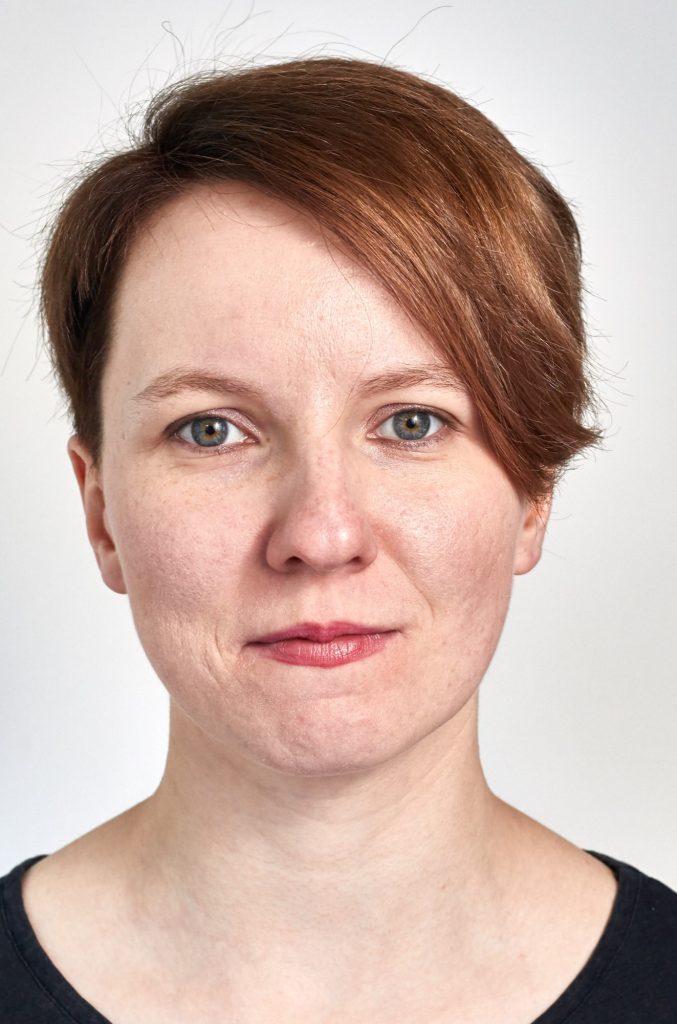
Originally from Poland, Ola Siebert is a PhD candidate at the Faculty of Communication at Université du Québec à Montréal (Canada). Her thesis focuses on sociotechnical imaginaries in the artificial intelligence industry in Québec and in Poland. She is also interested in nostalgia and its performative and futuristic aspects, and the relation between gender and technology.

Emilie Szwajnoch is a PhD candidate in the field of political science and a research assistant at the University of Silesia in Katowice (Poland). She is a principal investigator in the Preludium grant project funded by the National Science Centre, Poland (grant no. 2020/37/N/HS5/02910). Before starting her PhD studies, she graduated from a Chinese-English translation master program. In her
research, Emilie currently focuses on selected aspects of China’s domestic politics (with a special interest in the development of the Social Credit System) and on how China might export some of its domestically developed surveillance tools to Central Asian countries (with a special focus on Safe and Smart City projects). Emilie’s empirical studies rely on her linguistic background; they are primarily based on analyses of Chinese- and Russian-language sources, including regulations, policy documents, or press releases.
Former members / Alumni

Kenza Benkrid is pursuing a master’s degree in management sciences at ESG-UQAM, specializing in organizational development. She joined the team on the “employee electronic surveillance” project as a research assistant. She has 10 years’ experience in the vocational training field on skills development projects for corporate professionals, and another 10 years in strategic HR functions for multinationals. She is understands the challenges of managing the business profitability versus team mobilization paradox, and positions herself as a business partner to accompany organizational change projects. Her masters’ thesis will focus on succession dynamics in family businesses in Quebec.

Grégoire Florian holds a bachelor’s degree in foreign languages and is now pursuing a master’s degree in international management at ESG UQAM. His areas of interest include organisational management, human resources, and change management. He is a member of the Concerted Actions research project funded by the Fonds de Recherche du Québec, where he is honing his knowledge through field studies on teleworking and its effects on employees.

Nolwenn Jan holds a Bachelor’s degree in Business Administration and will soon be completing a Master’s degree in Management Science, specializing in organizational development, at the Université du Québec à Montréal. She was an intern with the Technology, Work and Family international research team as part of the “Envisagez la recherche” program at ESG UQAM. Her professional interests focus on the dynamics of influence in the context of telework, organizational change and the reconciliation of work and family life. Her master’s research project focuses more specifically on social support measures for work-family-care reconciliation in virtual teams.

Zineb Jahi holds a bachelor’s degree in international business from HELMo in Belgium. She is currently pursuing a master’s degree in management at ESG UQAM. She is focusing her master’s dissertation on knowledge sharing within organisations, specifically the impact that teleworking can have on knowledge transfer for employees in the logistics sector. Following her experience in the logistics sector, Zineb wanted to understand how organisations operating in such a vibrant sector were able to continue to increase their knowledge while their employees were teleworking. After her master’s degree, she hopes to apply the research from her dissertation by working in this sector again.